Why a Basketball Pick Creates a Split-Second Choice
A basketball pick creates a split-second choice: learn how defenders respond to a screen and how each decision opens a different path to space.
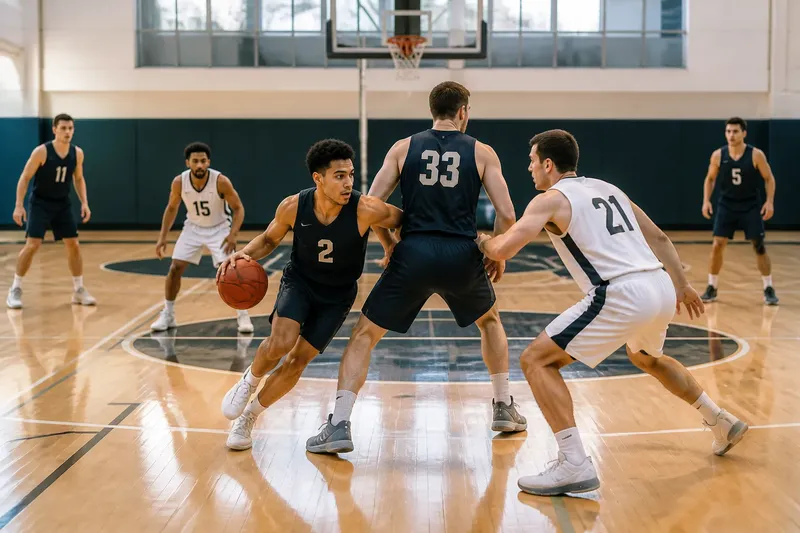
Why does a basketball pick create a split-second choice? Because a screen makes two defenders account for the same ball-handler at once, while the other players keep moving. Imagine a hypothetical half-court possession in which a guard dribbles toward the right side and a teammate steps into the path of the guard’s defender. The defense must decide how to cover the ball and the screener; the offense reads that decision and looks for the space it leaves behind.
A pick, also called a screen, is an offensive player’s attempt to occupy a defender’s route so a teammate can move past. The screener does not need to knock anyone down or make contact. The tactical effect comes from the defender’s need to get around the screen while staying connected to the ball-handler. That delay can be enough for the offense to create a useful angle, a driving lane, or a pass to an open teammate.
The starting alignment
In this invented possession, the guard has the ball near the top of the key. The center moves up from the lane and sets a screen just to the guard’s right. The guard’s defender is close, the center’s defender is a step inside the lane, and two other offensive players are spaced near the wings and corners. No shot or pass is available yet; the screen is about to make the defense show its priorities.
The guard can use the screen by dribbling tightly around the center’s shoulder, or reject it by changing direction before reaching it. Here, the guard uses it and turns toward the middle. That route matters: it brings the ball-handler across the screen and toward the center’s defender, forcing the defense to decide whether to exchange assignments, chase from behind, or send help.
The center’s positioning matters too. A stationary screen gives the guard a firm route around it. After setting it, the center can turn and move toward the basket, a movement called a roll. The defender’s response to the screen therefore affects not only the guard’s drive but also the center’s path and the help defenders’ responsibilities.
Three defensive choices
Switch the assignments
On a switch, the guard’s defender takes the center, while the center’s defender steps out to cover the guard. The switch aims to keep a defender in front of the ball without allowing the screener to roll freely. It can be sensible when both defenders can handle the new matchup, but it changes who is guarding whom and may leave one offensive player with a size or speed advantage.
In the imagined play, the center’s defender moves toward the guard and the original guard defender turns toward the rolling center. The guard now faces a larger defender near the top of the lane. If that defender stays back, the guard may have room to shoot or accelerate. If the defender closes the gap, the center may have a lane behind the play.
Go over the screen
Going over means the guard’s defender takes the longer path around the screen’s top side, staying between the ball-handler and a possible outside shot. The center’s defender can remain closer to the rolling screener or briefly contain the guard until the original defender recovers. This is not a full exchange: each defender generally tries to return to the original assignment.
In the invented possession, the guard’s defender follows over the screen and trails the ball-handler. The center’s defender steps toward the guard just long enough to slow the drive. That moment of pressure can push the guard to pass, pause, or continue into traffic. If the center’s defender stays engaged too long, however, the rolling center may move behind that defender without anyone close enough to contest the pass.
Help from another defender
A defender who is not directly involved in the screen can help by stepping toward the lane to deter the drive. The helper is then temporarily farther from an assigned offensive player. The defense has gained another obstacle for the ball-handler but has also created a possible passing target.
Suppose the wing defender leaves the corner to help as the guard turns the corner. The guard can pass to that corner if the helper commits. A teammate on the wing may also become available if another defender rotates to cover the corner. Help is not a single action: each step toward the ball can require a teammate to cover the player left behind.
How space appears
Space is not simply an empty patch of court. It is a route or passing window that becomes usable because defenders are occupied, displaced, or uncertain about their next assignment. The screen changes the defense’s positions and timing; the ball-handler’s job is to notice which defender has moved and which teammate is now less closely guarded.
In the hypothetical possession, the defense switches. The guard sees the center’s defender retreat toward the rolling teammate rather than press forward. The guard keeps the dribble, advances into the opening near the free-throw line, and draws a second defender. The guard then passes to the center, who has continued toward the basket. The expected observable result is a catch closer to the rim, with the defense moving to contest rather than already set in front of the receiver.
That result is not automatic. If the switched defender steps forward, the guard may have to pass earlier. If the original defender recovers quickly, the drive may close. If another defender covers the roll, the center may not be open. The value of the screen is that it makes the defense reveal a response; the offense still has to read and act on what happens.
Reading the defender
For the ball-handler, the first useful cue is the defender’s path around the screen. A defender trailing behind suggests the guard may have a brief advantage in front. A defender meeting the guard early signals that the lane is being contained, so a pass or change of direction may be wiser. A defender backing away can leave room for a pull-up shot, provided the guard is balanced and in position to take it.
The screener should read the same sequence from a different angle. If the screener’s defender steps out toward the ball, the roll may open behind that defender. If the defender stays near the basket, the guard may have space to drive or shoot. If both defenders crowd the ball, the screener can move into the uncovered area or prepare to receive a pass.
Teammates away from the screen should remain useful rather than drift toward the ball. Their spacing makes the helper choose: stay attached to a shooter, or leave that player to slow the drive. A corner player who moves into the same lane as the rolling center can erase the very opening the screen created. Holding a sensible position can preserve a clear passing lane.
What changes the read?
The same screen can produce different choices depending on where it is set, the defenders’ positions, and the ball-handler’s strengths. A screen near the sideline gives the defense fewer directions to cover than one near the middle. A guard who can shoot may force the defender to go over; a guard who prefers to drive may invite the defender to sag back. The defense’s preferred coverage also depends on whether it wants to protect the basket, deny a particular player, or avoid a mismatch.
Timing is another part of the read. If the guard reaches the screen before it is set, the route can be cramped and the screen may not help. If the guard waits too long after it is set, the defender may recover or the defense may organize a switch. A coordinated offense uses the screen and the dribble together: the guard approaches at a controlled pace, then changes speed or direction as the defender commits.
Players also need to recognize that a screen can fail to create an advantage. The defender may slip around it, the ball-handler may take a poor angle, or a second defender may cover both threats. In those moments, forcing a drive can turn a small opening into a crowded one. Resetting the offense or passing to a teammate can preserve the possession and create a better opportunity.
Questions about picks?
What is the difference between a pick and a screen?
They are commonly used to describe the same action: an offensive player positions themself to impede a defender’s route and free a teammate. “Pick-and-roll” names a familiar follow-up pattern in which the screener turns and moves toward the basket after the ball-handler uses the screen.
Why does the guard’s angle matter?
A tight turn around the screener makes it harder for the defender to slip through the gap and stay alongside the ball. A wide turn gives the defender more room to recover and may steer the guard away from the opening the screen was meant to create.
Does a switch always create a mismatch?
No. A switch changes the assignments, but the new matchup may be comfortable for both defenders. Even when a mismatch appears, the offense must recognize it and use the advantage before another defender can help.
What should a viewer watch first?
Watch the two defenders nearest the screen: note who takes the ball-handler, who tracks the screener, and whether a third defender moves toward the lane. Then follow the ball-handler’s next choice, such as driving, passing, or pulling up, rather than judging the play only by whether a shot goes in.
The choice is the tactic
A basketball pick creates a split-second choice because the screen brings two offensive threats into a shared decision for the defense. Switching, going over, and helping each protect something while exposing another route. The ball-handler, screener, and spaced teammates can all respond to the space that appears, but they have to read the same defensive movement together.
When watching a game, follow the defender who leaves their original assignment. That movement often explains where the next opening will be: behind the defender for a roll, in front of a trailing defender for a drive, or on the perimeter where a helper has left a shooter. The screen is the prompt; the defense’s choice tells you what the offense can try next.